

Why Most Education & Growth Marketing Fails (And What Actually Works)
Many education companies invest heavily in marketing but still struggle to generate consistent enrollments, trial users, or qualified leads.
They run ads.
They post on social media.
They hire agencies.
Yet growth still feels unpredictable.
This leads many founders and marketing leaders to wonder:
“Why does our marketing keep failing?”
The reality is that most marketing fails not because of effort, but because of structure.
Organizations are running marketing activities — but they haven’t built a growth system that connects those activities together.
Understanding this difference is the key to building predictable growth.
The Real Reason Marketing Fails
When marketing fails, it’s rarely because a single tactic is wrong.
The real issue is that most organizations run disconnected marketing efforts instead of a unified system.
They might invest in:
- SEO
- paid advertising
- social media
- content marketing
- email campaigns
But these activities often operate independently.
Without a connected system, even good marketing tactics produce inconsistent results.
Let’s look at the most common reasons marketing fails.
1. Disconnected Marketing Channels
One of the biggest reasons marketing fails is that organizations run channels in isolation.
For example:
- SEO is managed separately from email marketing
- ads drive traffic to generic pages
- social media posts are disconnected from lead generation
Each activity may perform reasonably well on its own.
But without coordination, they don’t reinforce each other.
This leads to a common situation:
More traffic, but no meaningful increase in customers or enrollments.
Successful organizations don’t run random marketing campaigns.
They build systems where each channel strengthens the others.
2. Traffic Without Conversion Infrastructure
Another reason marketing fails is that organizations focus heavily on driving traffic but ignore what happens after someone arrives.
Many websites are built primarily to provide information.
But visitors need a clear next step.
Without structured conversion pathways, most visitors leave without taking action.
Common missing elements include:
- lead capture funnels
- trials or consultations
- interactive assessments or quizzes
- downloadable resources
- clear calls to action
When these systems aren’t present, marketing efforts simply generate more visitors who disappear.
3. Weak Lead Nurturing
Education decisions often take time.
Parents researching tutoring programs, professionals considering courses, or organizations evaluating training platforms rarely make decisions immediately.
Instead, they evaluate options over days or weeks.
Without automated nurturing systems, interested prospects often vanish before making a decision.
Common nurturing gaps include:
- no automated email follow-up
- inconsistent communication
- lack of educational content
- no structured relationship building
When nurturing is weak, organizations lose many potential customers who were actually interested.
4. No Unified Growth Strategy
Many organizations launch marketing initiatives without a clear understanding of how each effort contributes to the overall growth process.
This creates a cycle of experimentation:
- try ads
- stop ads
- try content
- try social media
- switch agencies
Each effort starts from scratch.
Without a unified strategy connecting visibility, lead generation, nurturing, and conversion, momentum never builds.
This is why many companies feel like they are constantly restarting their marketing.
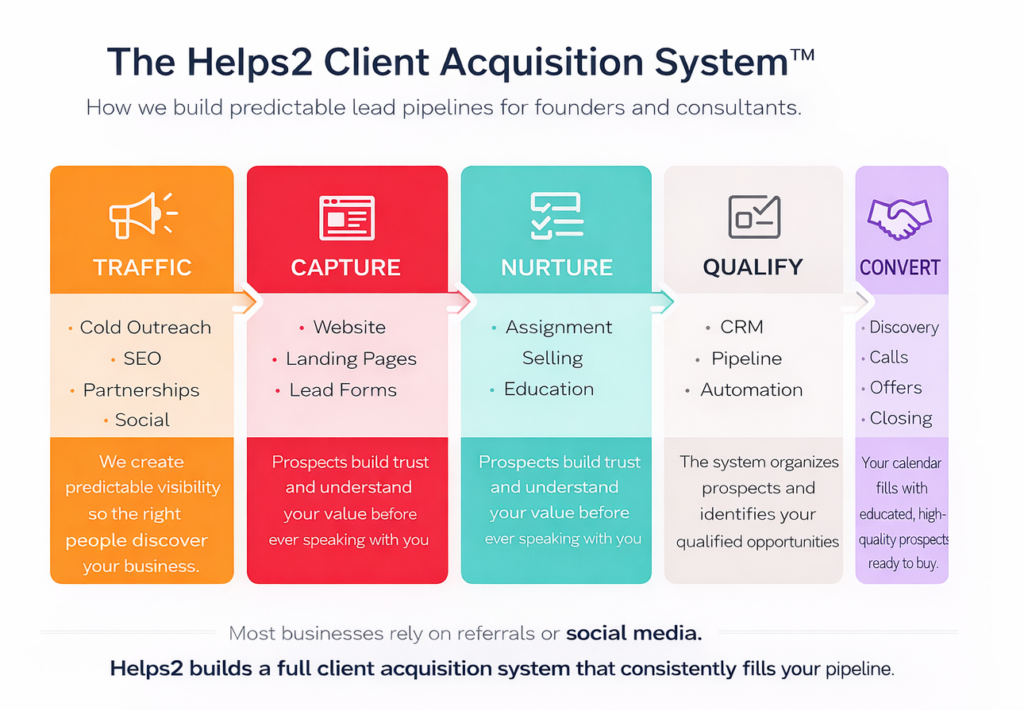
What Actually Works: Growth Systems
Organizations that achieve predictable growth approach marketing very differently.
Instead of running isolated campaigns, they build growth systems.
A growth system connects every stage of the customer journey:
Visibility → Lead Capture → Nurture → Qualification → Conversion
Each stage supports the next.
Traffic becomes leads.
Leads become opportunities.
Opportunities become customers.
When this system works properly, marketing becomes far more predictable.
What a Growth System Looks Like
A growth system typically includes five core components.
1. Visibility
The first stage ensures the right audience discovers your organization.
Common channels include:
- SEO and search visibility
- educational content
- partnerships
- targeted advertising
- thought leadership
The goal is not simply traffic.
The goal is qualified discovery.
2. Lead Capture
Once someone discovers your organization, lead capture systems convert anonymous visitors into identifiable prospects.
Examples include:
- quiz funnels
- free trials
- downloadable resources
- webinar registrations
- consultation booking
Without lead capture, marketing efforts create visibility but not relationships.
3. Nurture
After someone expresses interest, nurturing systems help them evaluate their options.
Effective nurturing often includes:
- automated email sequences
- educational resources
- case studies
- insights and frameworks
This stage builds trust and authority.
4. Qualification
Not every lead is a good fit.
Qualification systems help organizations identify real opportunities.
These systems may include:
- CRM pipelines
- automated scoring
- structured discovery calls
Qualification ensures time and resources are focused on the right prospects.
5. Conversion
The final stage makes it easy for qualified prospects to move forward.
Conversion systems may include:
- enrollment funnels
- onboarding systems
- structured sales conversations
- clear offers
When all stages work together, marketing stops feeling chaotic and begins producing consistent results.
How to Know If Your Marketing System Is Broken
If marketing fails repeatedly, the problem often lies in the growth system itself.
Some common warning signs include:
- website traffic that doesn’t convert into leads
- inconsistent enrollment or client growth
- marketing channels operating independently
- reliance on referrals for most new customers
- leads disappearing without follow-up
These signals typically indicate that growth infrastructure is missing.
The Goal: Predictable Growth & Predictable Revenue
Successful organizations don’t chase individual marketing tactics.
Instead, they focus on building infrastructure that connects the entire growth process.
When visibility, lead capture, nurturing, and conversion work together, marketing becomes far more predictable.
The result is a system where:
- the right audience discovers your organization
- interested visitors become leads
- leads develop trust over time
- qualified prospects convert into clients or enrollments
That is the difference between marketing activity and a growth system.
Final Thoughts
Marketing fails for many organizations not because their teams lack effort or creativity.
It fails because the underlying system connecting marketing activities is missing.
Organizations that move from isolated tactics to integrated growth systems create far more consistent results.
Instead of constantly experimenting with new marketing ideas, they build infrastructure that turns visibility into qualified leads and real revenue.
Want to Evaluate Your Growth System?
If you’re curious how your current growth infrastructure compares, you can start by examining the five stages outlined above:
Visibility → Lead Capture → Nurture → Qualification → Conversion
Identifying the weakest stage is often the first step toward building a more predictable growth engine. Click here to get in touch with us, and we’ll help you analyze where your biggest weakness is and where your greatest opportunity lies… no matter your budget!